The biggest thief of classroom time might just be FORGETTING. Every forgotten fact, formula or concept threatens to drag teachers back over ground they've already covered.
With schools already navigating staffing pressures, demanding curricula and persistent attainment gaps, how can we help students retain more of what they've learned, without adding to teacher workload?
One surprisingly powerful answer is also one of education's oldest tools: flashcards.
Today's digital flashcards have evolved far beyond simple question-and-answer cards. Platforms like Brainscape combine retrieval practice, spaced repetition and metacognition to help students retain knowledge, develop better independent study habits and give teachers greater visibility into their progress.
Here's how this approach could help schools address four interconnected challenges:
- The AO1 bottleneck: Students struggling to retain foundational knowledge, forcing teachers to spend valuable classroom time reteaching the basics.
- Staffing pressures and curriculum demands: Growing expectations and limited teaching capacity placing increasing strain on teachers and school resources.
- Ineffective independent revision: Students spending hours studying without developing the habits or using the techniques needed for lasting knowledge retention.
- The independent learning blind spot: Teachers lacking visibility into how consistently and effectively students are studying outside the classroom.
1. Overcoming the AO1 Bottleneck
Across knowledge-intensive subjects, the sheer volume of foundational content students need to retain creates a persistent challenge: teachers spend valuable classroom time reteaching concepts that have already been covered, rather than progressing to deeper learning.
This is the AO1 bottleneck.
The opportunity isn't to remove foundational knowledge teaching from the classroom. Students still need expert explanations, examples and feedback to develop understanding. Instead, it's to help them independently retain that knowledge once it's been taught.
This is where digital flashcards make a meaningful difference.
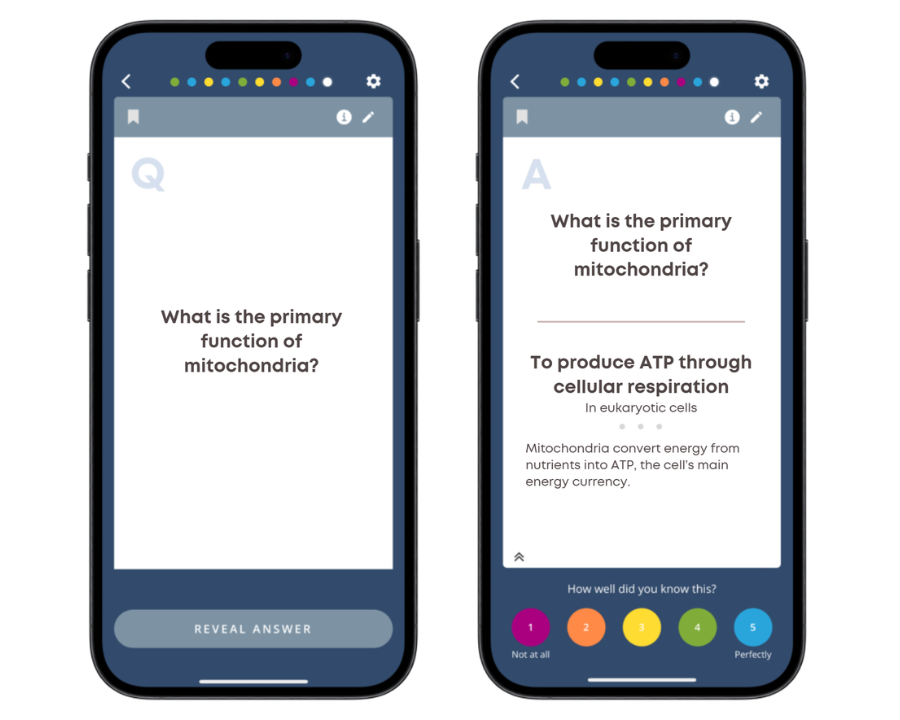
Caption: Digital flashcard apps, particularly those with spaced repetition built into their study algorithms, allow students to independently work on retaining knowledge, freeing up precious classroom time.
Well-designed flashcards require students to retrieve answers from memory rather than simply recognise familiar information on a page. When combined with spaced repetition, they also encourage students to revisit knowledge over time, strengthening retention.
For schools, the practical approach is straightforward:
- Identify the essential knowledge students must recall fluently within each curriculum unit.
- Provide curriculum-aligned digital flashcards to reinforce that knowledge between lessons.
- Establish short, regular retrieval practice routines that revisit previously taught material.
This allows students to arrive in class ready to build on their knowledge, giving teachers more time for discussion, problem-solving, addressing misconceptions and applying what they've learned.
2. Staffing Pressures & Curriculum Demands: Making Teaching Time Count
Schools are expected to deliver ambitious curricula, close attainment gaps and support students with different learning needs, often within significant staffing and workload constraints.
How can schools achieve more without expecting teachers to work more hours?
One opportunity lies in distinguishing between learning activities that require direct teacher involvement and those students can undertake independently.
Digital flashcards are particularly useful for the latter.
Once teachers have introduced and explained a topic, students can use structured flashcard decks to reinforce key concepts at home, between lessons or during supervised study periods.
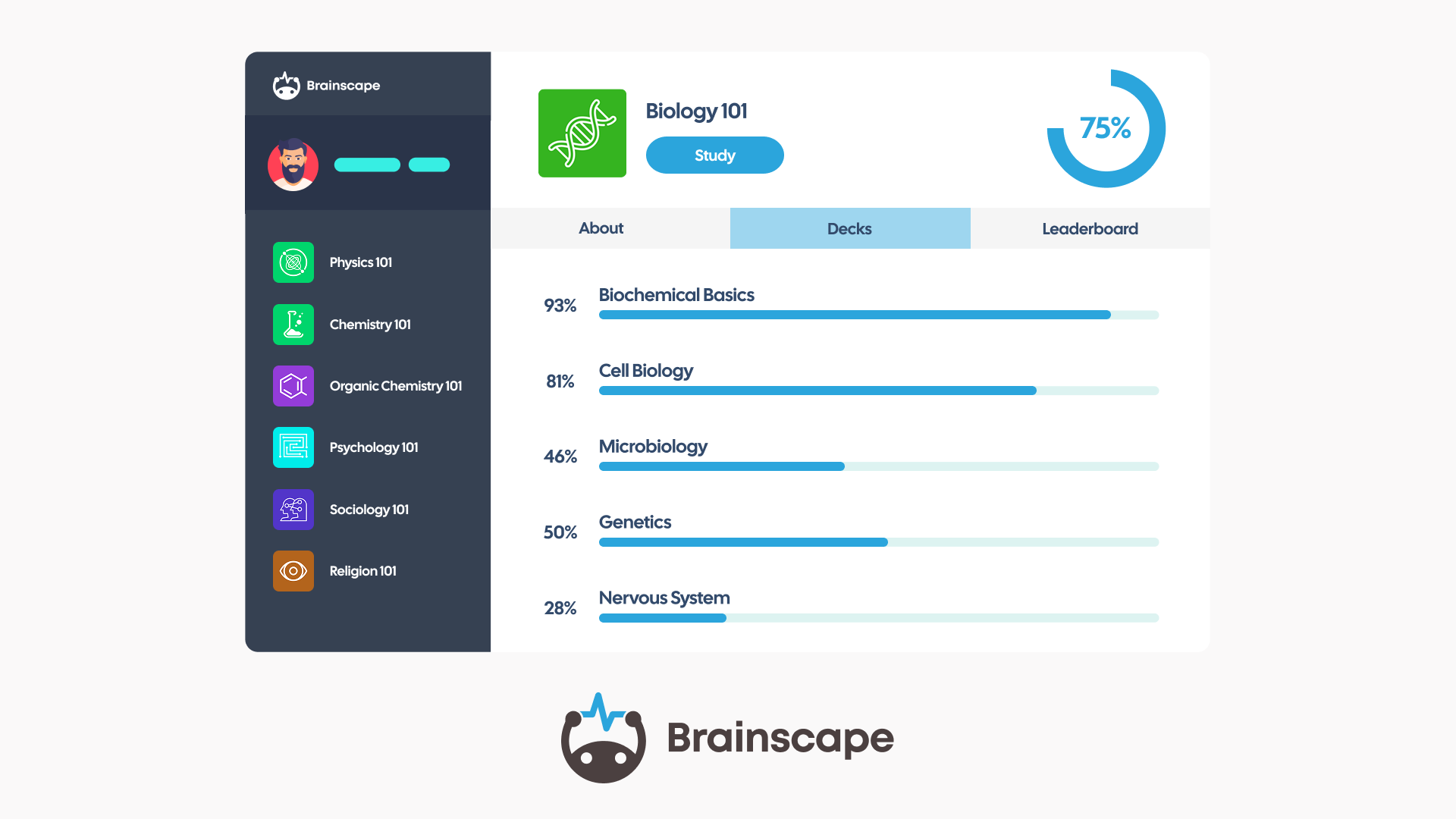
Caption: Brainscape’s web and mobile flashcard platform organises subjects into focused, bite-sized decks, making independent revision more manageable. Students can track their percentage mastery of each deck, helping them identify knowledge gaps and prioritise weaker topics.
Better still, collaborative digital platforms allow schools to create, reuse and share curriculum-aligned resources across classes and departments, reducing duplicated preparation.
This doesn't eliminate the need for reteaching. But it can make revision more systematic and free teachers to focus their attention where it's most valuable.
For school leaders, the key is to implement approaches that are scalable, accessible and genuinely reduce workload, rather than simply introducing another task for teachers to manage.
3. Independent Revision: Are Students Actually Learning, or Passively Rereading?
When students say they've spent an hour revising, how much of that knowledge will they remember next week?
Rereading notes, highlighting textbooks and watching revision videos can feel productive because the material becomes increasingly familiar. But familiarity isn't the same as being able to recall something without looking at it.
This is where three evidence-based learning principles become particularly valuable:
- Retrieval practice: Actively recalling information from memory strengthens learning.
- Spaced repetition: Revisiting knowledge over increasing intervals helps combat forgetting.
- Metacognition: Recognising what you know, what you don't and what to study next supports independent learning.
The Education Endowment Foundation's guidance on metacognition and self-regulated learning highlights the importance of explicitly teaching students to plan, monitor and evaluate their learning.
Digital flashcard platforms can bring these principles together in one structured study experience.
For example, Brainscape asks learners to rate their confidence after answering each flashcard, using those ratings to prioritise weaker knowledge for more frequent review.
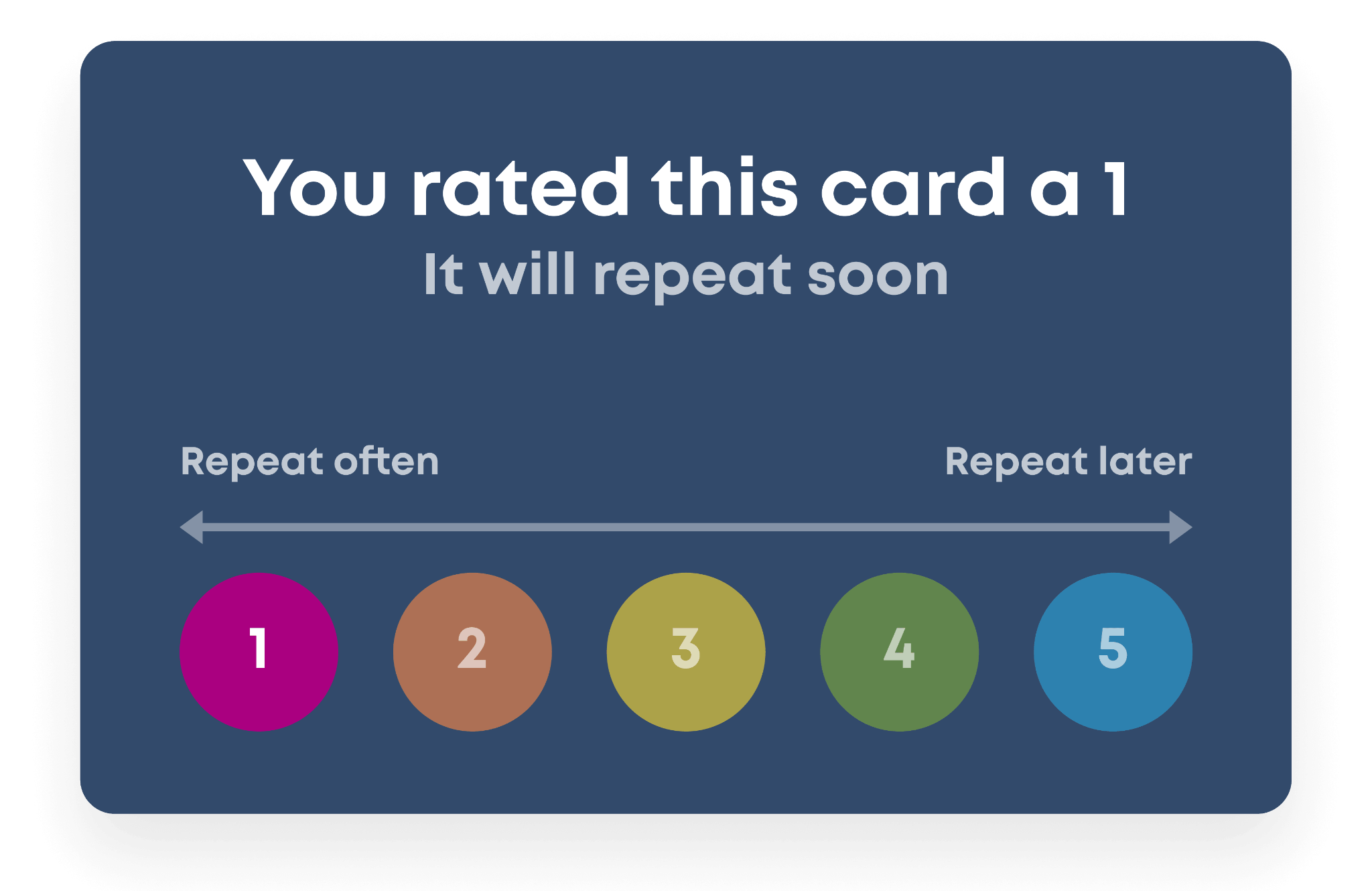
Caption: Brainscape's confidence-based spaced repetition algorithm asks students to rate how well they know each flashcard on a scale of 1–5. Weaker concepts are repeated more frequently, while well-known material is spaced further apart, helping students focus their revision where it's needed most.
Crucially, this encourages students to reflect on their understanding rather than simply work through a list of revision materials.
Of course, the technology alone won't create effective study habits. Teachers still need to demonstrate how to use flashcards properly, encourage honest self-assessment and help students develop manageable routines.
Independent study is a skill that needs to be taught, not simply assigned.
4. Making Learning Visible: What Happens Between Lessons?
Even when schools establish independent revision routines, how do teachers know whether students are actually studying effectively?
Traditional homework completion may show whether a task was submitted, but it often reveals little about the learning that took place.
Digital flashcard platforms can offer an additional layer of insight through learning analytics, helping teachers understand:
- Study consistency: Are students revising regularly or cramming before assessments?
- Knowledge gaps: Which concepts are they struggling to recall confidently?
- Learning progress: How is their demonstrated or self-reported mastery developing?
- Intervention opportunities: Who may need extra support or encouragement?
For example, Brainscape's teacher analytics provide visibility into students’ study activity, confidence-based mastery and engagement over time.
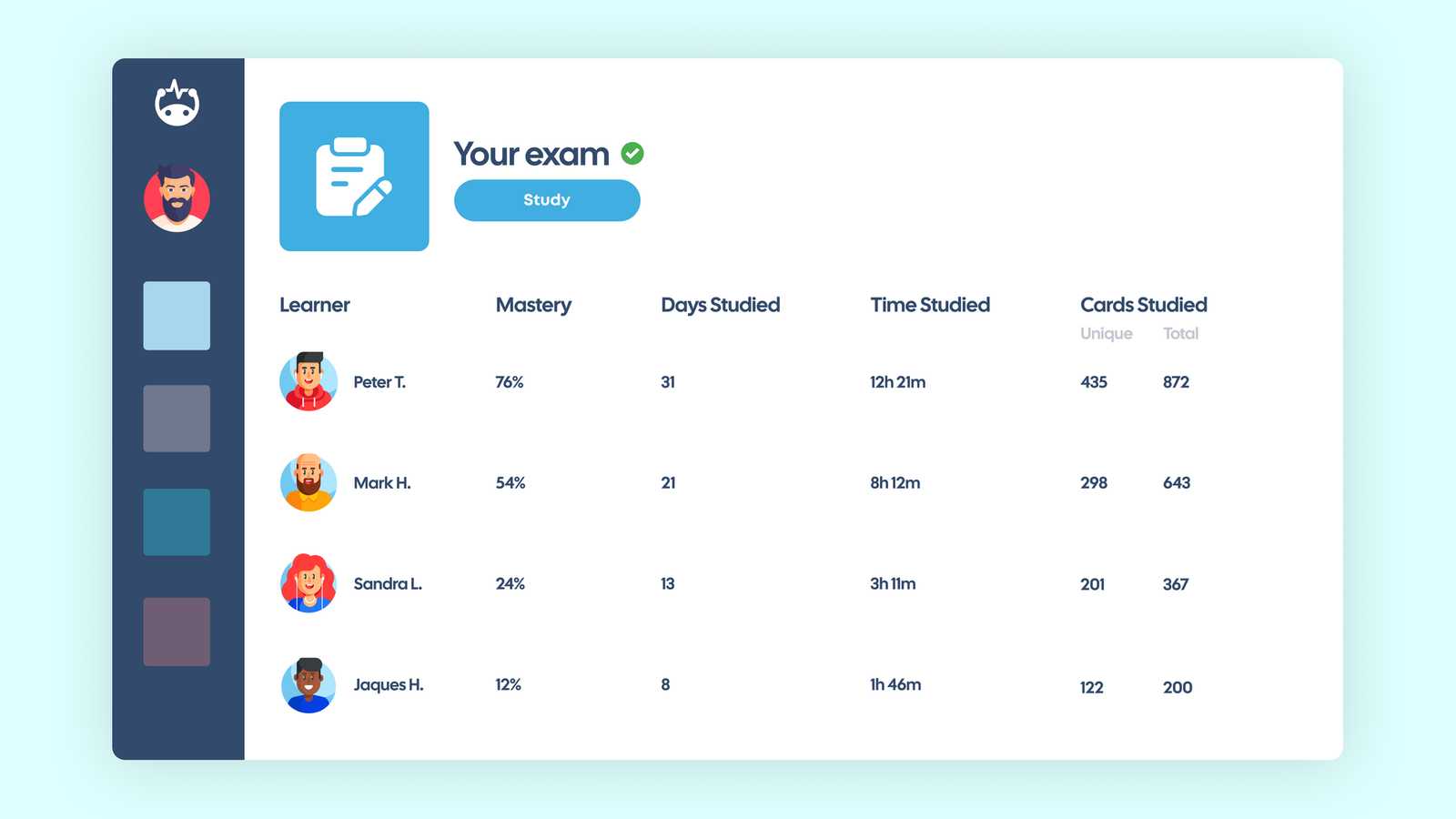
Caption: The Learner's Tab in Brainscape shows individual learner metrics like total mastery, days studied, time studied, and more, giving teachers visibility over their students’ revision habits.
These insights shouldn't replace classroom assessment or professional judgement. Rather, they can help teachers identify patterns, ask better questions and provide more targeted support.
As the EEF's guidance on using digital technology emphasises, technology is most valuable when it addresses a clearly identified educational need.
For school leaders evaluating EdTech solutions, that's an essential consideration.
Getting Started: A Practical Approach for Schools
Improving independent revision doesn't require a complete overhaul of your school's teaching strategy. Start with one subject, one year group and one clearly identified knowledge-retention challenge.
- Identify: Select a topic where students frequently forget essential knowledge.
- Create: Develop or adapt a set of focused, curriculum-aligned digital flashcards. (You can find inspiration in Brainscape’s flashcard library, particularly within these GCSE flashcards.)
- Embed: Establish short, regular retrieval practice sessions and explicitly teach students how to study effectively.
- Evaluate: Use classroom questioning, low-stakes assessments and available study analytics to measure progress and refine the approach.
If the pilot demonstrates better retention, consistent engagement and manageable teacher workload, consider expanding the approach across departments or year groups.
Let's Talk About Better Learning, Without Increasing Workload
The digital flashcard app Brainscape is working with educators to make effective independent revision easier to implement, monitor and scale.
Our cognitive science-backed web and mobile study platform combines adaptive digital flashcards, confidence-based spaced repetition and learning analytics to help students build lasting knowledge while giving teachers greater visibility into their learning.
But the bigger opportunity is what becomes possible when students arrive in class remembering more of what they've already learned.
Suddenly, there’s more time for discussion, more opportunities for critical thinking, more targeted support, and less time lost to repeatedly revisiting the basics.
The goal? To make better use of teachers’ expertise and precious classroom time.
Brainscape will be exhibiting at the Schools & Academies Show on 18–19 November 2026 at the NEC Birmingham. If you're a school or trust leader looking to improve attainment, strengthen independent learning or reduce the burden on your teaching staff, come and meet the team at Stand M9!
We'd love to hear about the challenges you're facing and explore what smarter independent revision could look like in your school.